


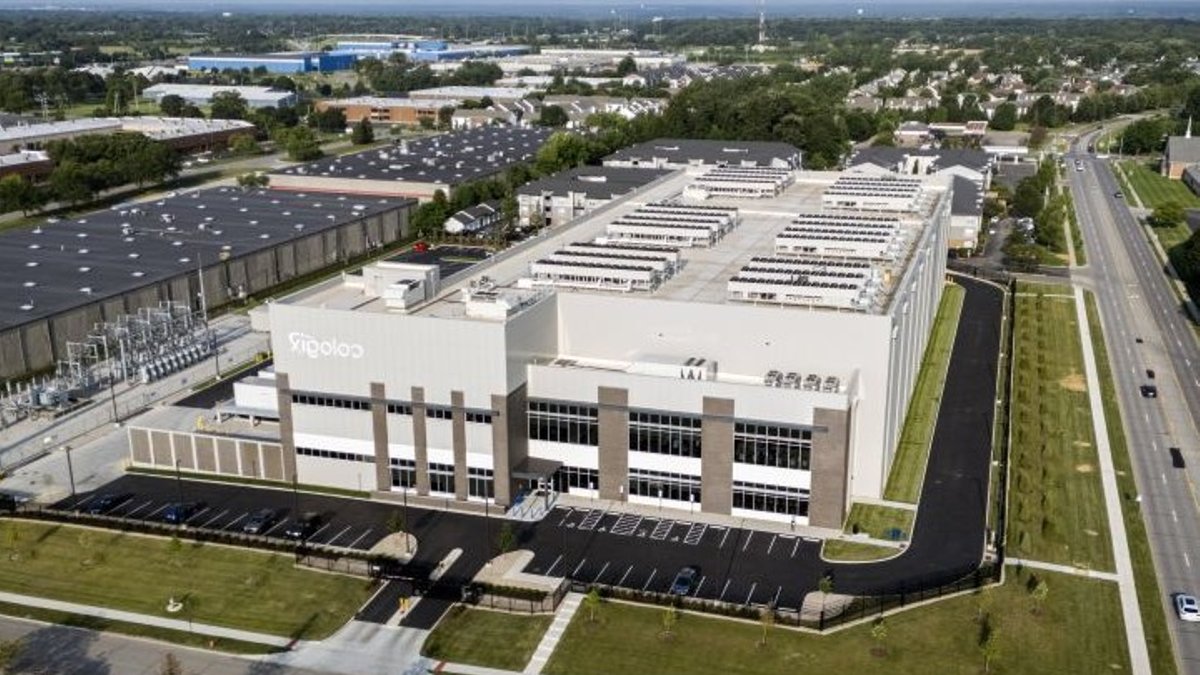
Lawmakers at various levels of government are seeking decision-making authority over the construction of data centers, which provide the computing power needed for artificial intelligence (AI). This spring, the County Commission of Box Elder, Utah, voted unanimously to advance the construction of a 40,000-acre “hyperscale” data center, despite local protests.
Officials cited both economic and national security benefits of the project as justifications. However, not all government officials share the same views on data centers. New York’s Governor Kathy Hochul recently signed an executive order that imposes a temporary moratorium on the construction of new data centers in that state.
The construction of data centers has sparked debates about their benefits and harms. While many state officials view data centers as economic boons, generating jobs and tax revenue, others are concerned about their environmental and economic impacts. Data centers consume tremendous amounts of power, which can raise electricity rates for nearby residents, and generate air, light, and noise pollution.
Additionally, data centers require thousands of gallons of water each day to cool their servers, straining local water supplies, especially in regions with water shortages. These problems have provoked opposition in some communities, with many municipalities across the United States enacting bans on data centers.
Related: Next Separation of Powers Clash Over Federal Spending
In 2025, local opposition blocked or delayed data center development worth an estimated $156 billion. These delays and bans pose obstacles for state governments trying to entice developers. Some states have attempted to reassert control by enacting statutes that limit municipalities’ ability to regulate data centers.
A recent West Virginia law, for example, prohibits counties and municipalities from limiting the creation of data centers “in any way.” In some states, state-level energy commissions hold authority over where large energy consumers, such as data centers, can connect to the power grid, allowing these commissions to dictate where data centers can be constructed.
Local activists in some communities have sued to stop data centers, alleging that local governments have failed to follow proper permitting procedures. In turn, some states are reducing permitting requirements, mandating that municipalities process permit applications more quickly, and restricting the bases for rejecting permits.
Not all state officials have accepted data centers, however, and a growing number are considering state-wide moratoriums on data center construction. In Maine, Governor Janet Mills vetoed a bill that would have imposed a similar moratorium, only because it lacked a carveout for one already approved data center.
Some researchers argue that state tax incentives for developers eclipse the revenue that the centers generate. Backlash from local communities has highlighted the effects of data centers on utility rates, and some state officials have challenged whether data centers produce the job growth that proponents suggest. A Brookings Institution report found that data centers generate some local jobs but fewer than many proponents claim.
Related: Courts Rule in Favor of Agency Adjudication
The overall effect depends strongly on the type of data center built. Some centers need continual support from local technology contractors and service providers, generating lasting jobs, but other data centers need less upkeep and primarily generate temporary jobs during construction.
As data centers continue to proliferate, stakeholders in and outside of government will continue to invoke legal, economic, environmental, security, and other arguments to advance competing regulatory approaches.
It is also worth examining how the current situation compares to past experiences with large-scale infrastructure projects, where local concerns often clashed with broader economic and strategic interests. In such cases, finding a balance between competing priorities has been key to successful outcomes.
The decision-making power over data centers will likely have important consequences for how they are built, how they operate, and who experiences their costs and benefits. As the debate continues, it will be important to consider the complex interplay of factors involved and to weigh the potential benefits against the potential drawbacks.


